

Disclosure: Long HTLD
Q2 Results
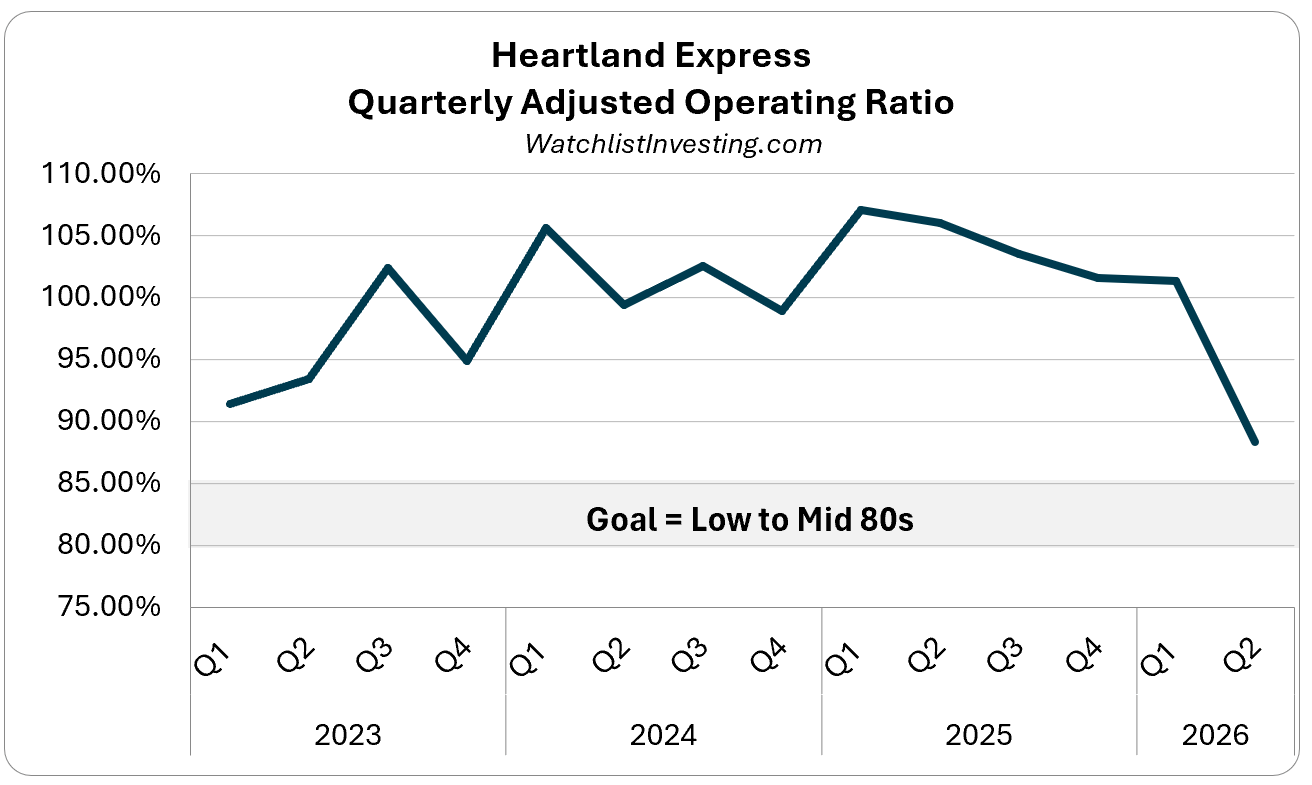
Heartland posted a solid improvement in operating results, though with a bit of an asterisk. The company posted a Q2 adjusted operating profit of $17.8 million on operating revenues (ex fuel) of $152 million, compared to a loss of $11 million on $186 million of operating revenues in the same quarter last year.
Its GAAP operating ratio improved to 91% and its non-GAAP OR to 88.3%.
The asterisk here is that the operating results include gains on asset sales, though to be sure they are a recurring feature of the P&L. The gain on sale in Q2 was 13.6% of revenue compared to a 2015-25 average of 4.1%. Making this adjustment, Heartland’s operating margin went from -2.9% in 2025 to -1.2% in Q1 to +0.2% in Q2. A worthwhile improvement, yes. But not as strong as it first appears.
There are a couple of ongoing forces at play in the industry:
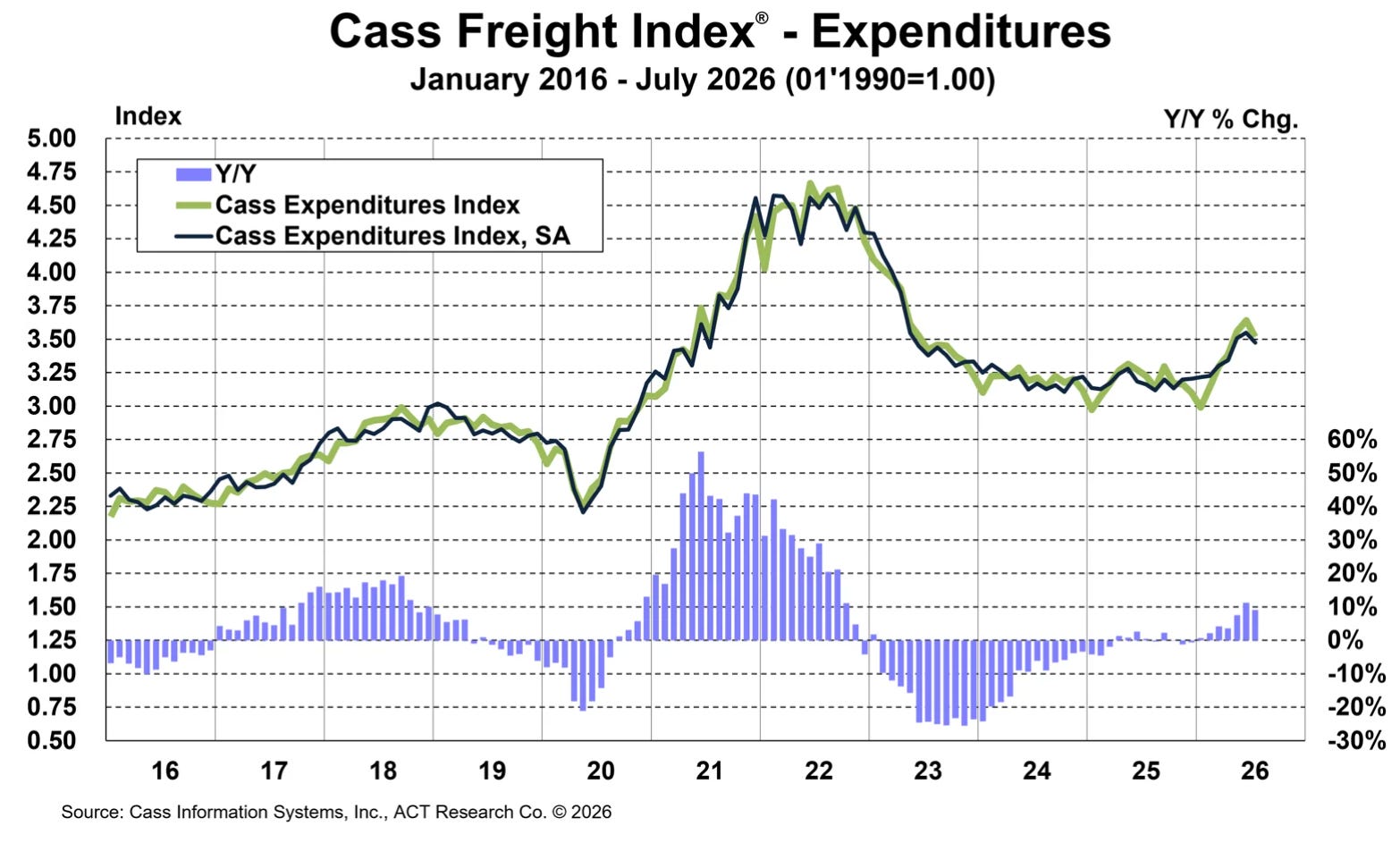
Freight volume and pricing are up, in part thanks to tighter industry capacity
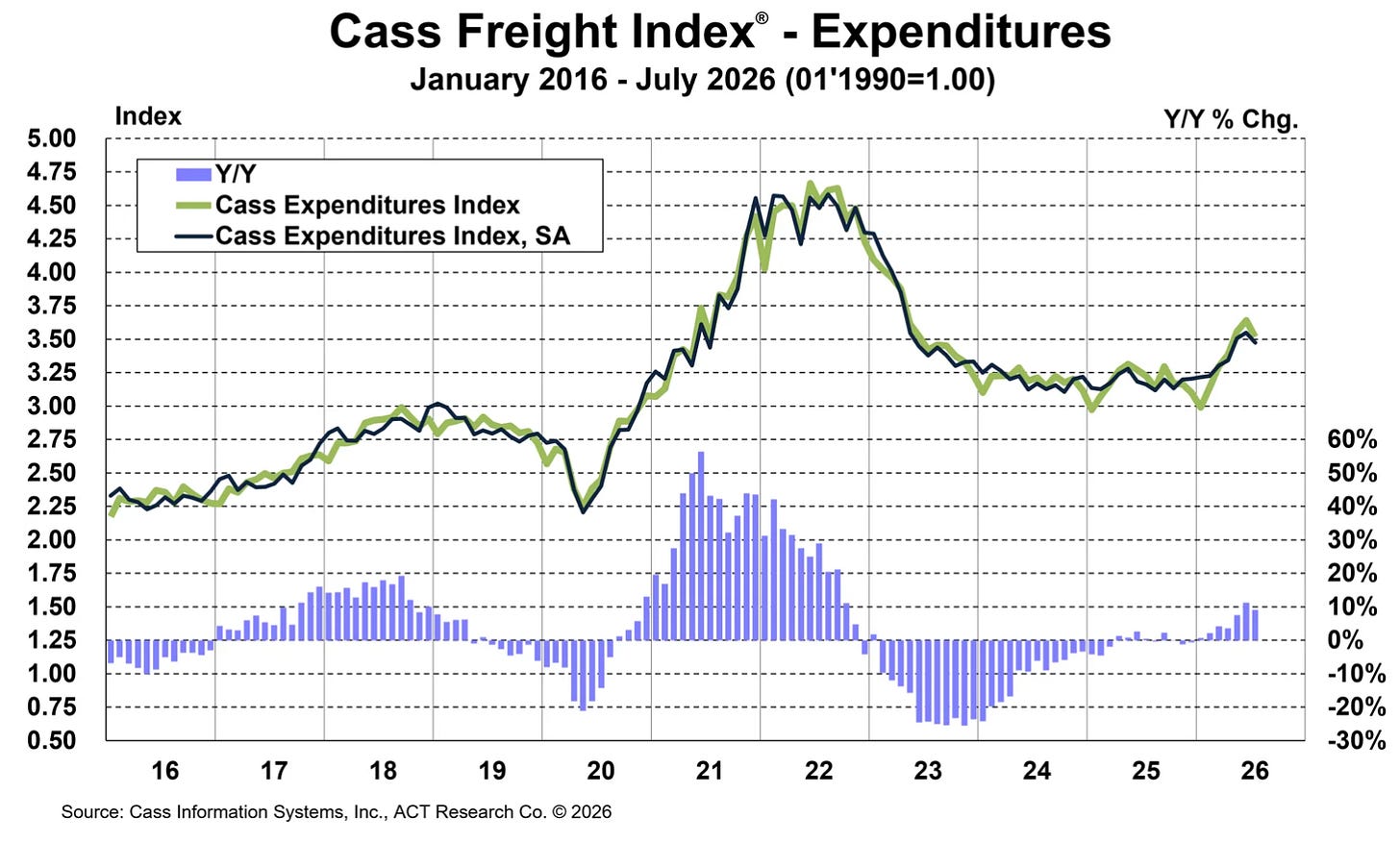
Related, Heartland continues to right-size its own fleet, leading to better utilization of assets
Heartland continues to shrink its fleet. The company reduced its net PP&E from $667 million at the end of 2025 to $627 million (-$40 million) at Q1 to $571 million (another $56 million) at Q2.
This is necessary to regain profitability, and it frees up cash, but it also represents a reduction in earning power that must be recognized in our valuation.
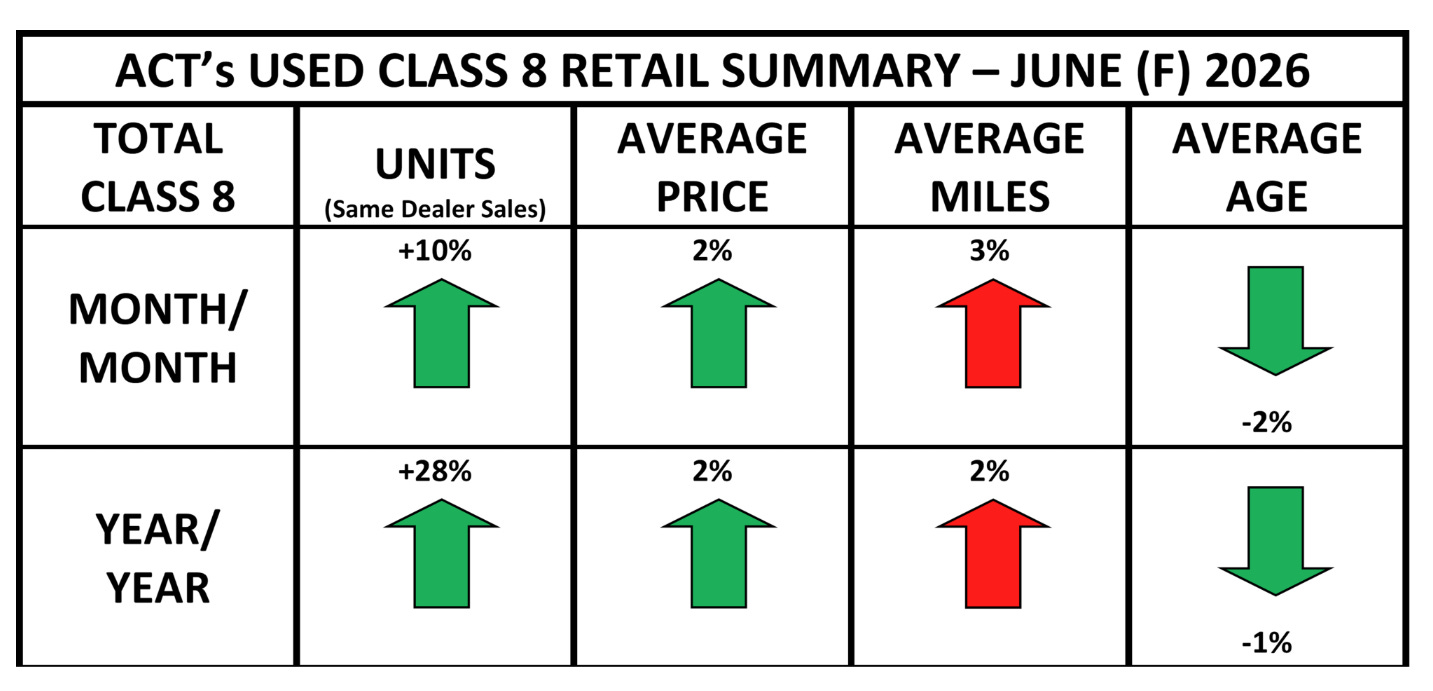
Sales accelerated in Q2 as used Class 8 prices firmed, though sales also included an unspecified amount of real estate sales during the quarter.
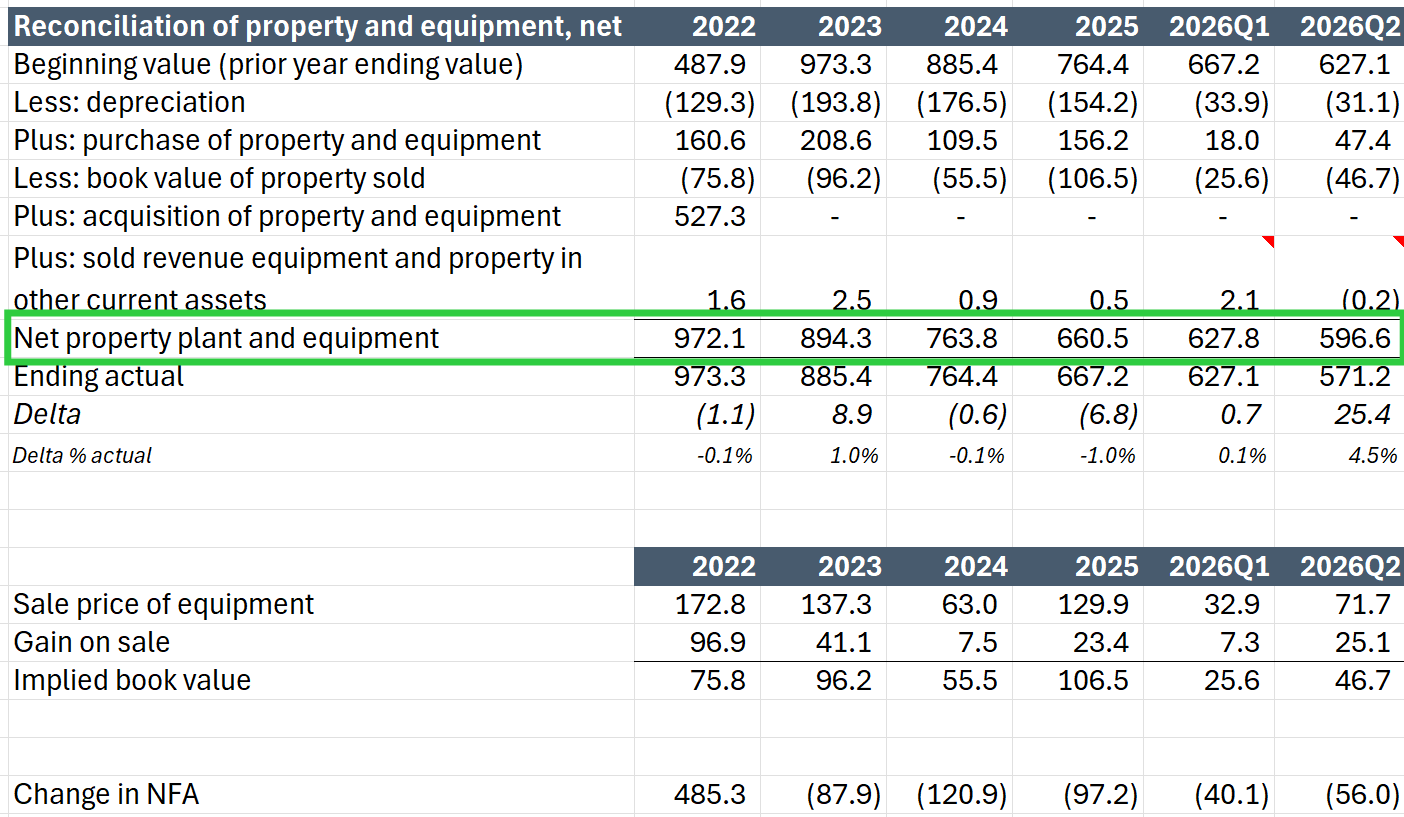
Note that the roll-forward uses figures from the cash flow statement. The $25 million difference between the actual ending figure is, I believe, due to assets being moved into current assets while they’re sold (I have an email to the company to confirm this).
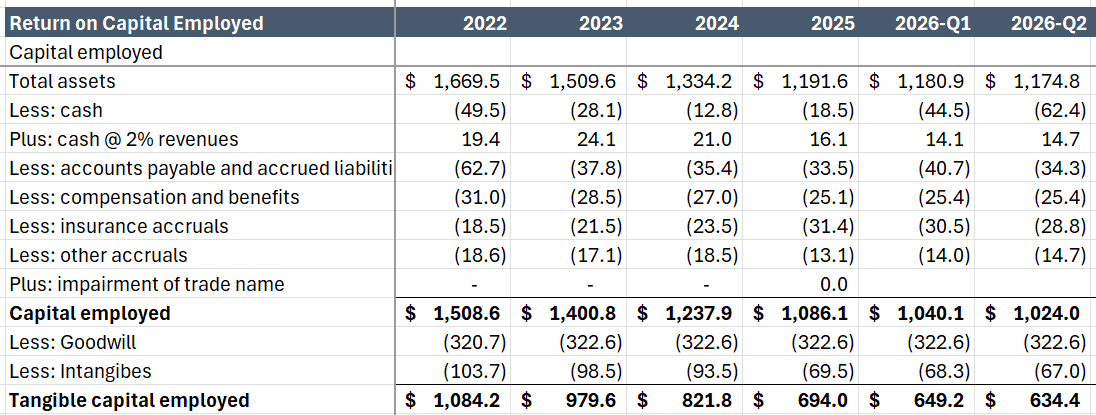
Here’s another look, this time at the capital employed calculation. We have seen the same effect since 2022, the year the company acquired Smith Transport and CFI.
Capital Allocation
On the plus side, Heartland used its positive cash flow to reduce debt and leases and return capital to shareholders via regular dividends and share repurchases.
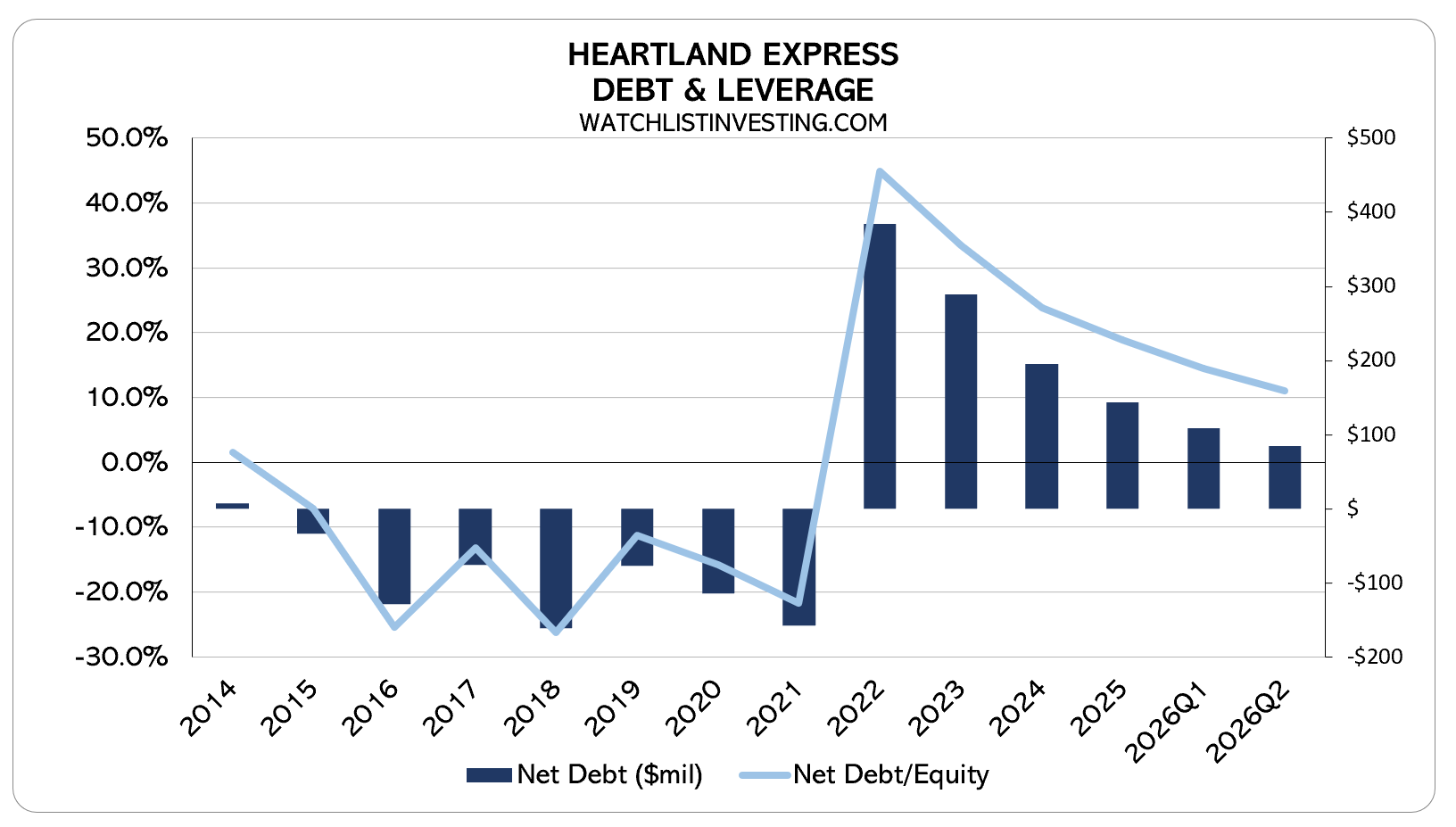
Net debt is down to just $84 million at the end of Q2 2026 from a high of $384 million at the end of 2022. If operational trends continue, I wouldn’t be surprised to see Heartland with no net debt by the end of 2026.
Share Repurchases
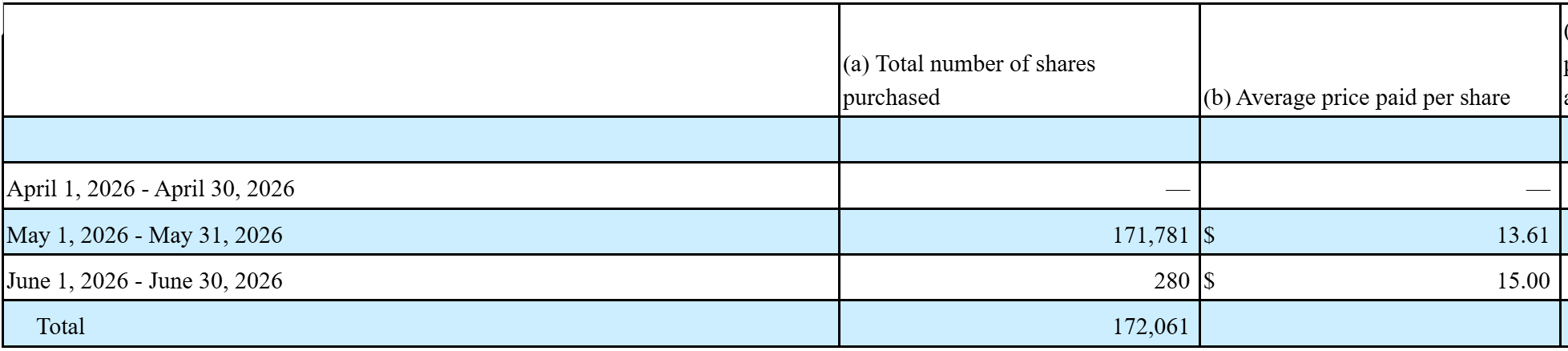
The company spent $2.3 million buying back 172,061 shares during Q2 at an average price of $13.62, with most of the purchases made in May at an average price of $13.61.
To sum up the major capital allocation moves during the quarter:
Shrunk its investment in PP&E by $56 million
Spent $2.3 million to repurchase shares
Paid $1.5 million in dividends
Reduced debt/leases by $6.7 million
Increased cash by $17.9 million
